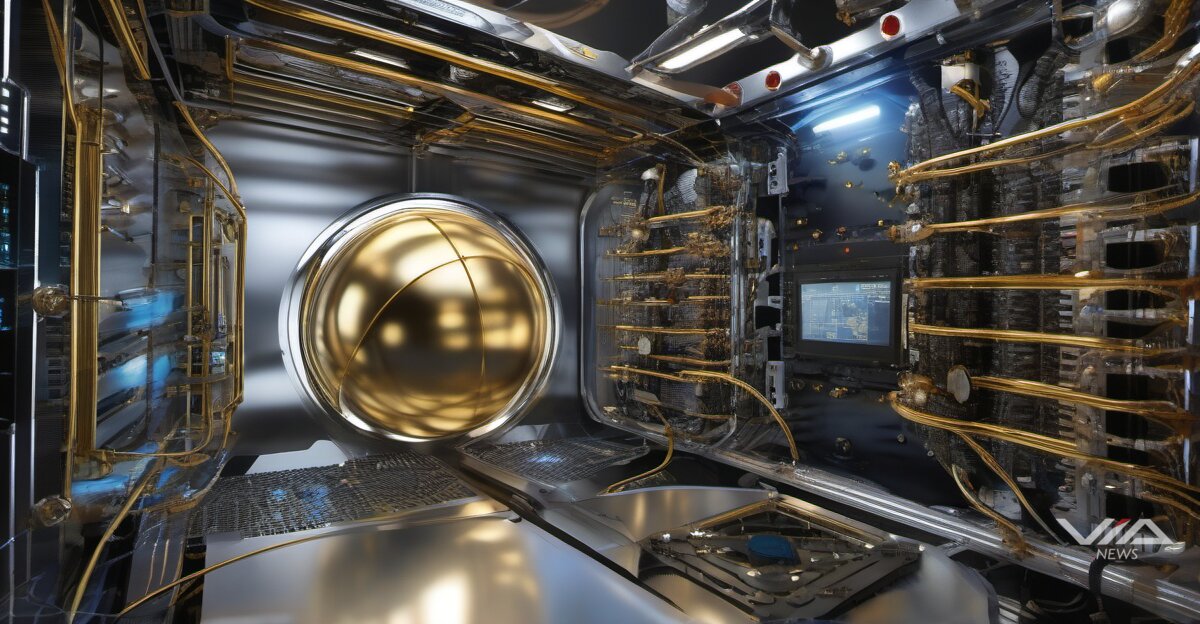
Everyone believes quantum computing will revolutionize AI. The data tells a different story.
Right now, five incompatible quantum architectures are burning through billions in R&D—superconducting, ion traps, photonic, topological, and neutral atoms. Each promises quantum advantage. None can prove it for AI workloads.
Here's what the numbers actually show: IBM's 1,121-qubit Condor needs cooling to 15 millikelvin. Ion traps offer minutes of coherence but scale like molasses. Photonic systems cut infrastructure costs 90% but have zero proven error correction at scale.
The conventional wisdom assumes pure quantum systems will replace AI accelerators. Wrong. The real race is for quantum co-processors that handle specific subroutines—optimization, sampling, linear algebra—while GPUs do the heavy lifting.
This creates a $50M+ capital allocation nightmare. Bet on superconducting? You're locked into expensive dilution refrigeration. Choose photonic? You're gambling on unproven error correction. Pick the wrong architecture and your entire R&D investment becomes technical debt.
The counterpoint: Maybe fragmentation accelerates innovation and we get hybrid solutions faster.
But here's the reframe: This isn't about quantum supremacy. It's about which architecture can deliver 100+ logical qubits for tensor operations by 2030. The winner takes the co-processor market. Everyone else gets acquired or dies.
Tell me I'm wrong about the consolidation timeline.
#quantumcomputing #artificialintelligence #deeptech
Follow-up
The infrastructure cost angle is crucial here. The full analysis breaks down why photonic systems might have a hidden scaling advantage despite the error correction gap, plus which specific AI workloads each architecture actually optimizes for: https://ai.via.news/quantum-computing-hardware/quantum-hardware-faces-architecture-fragmentation-as-five-competing-approaches